
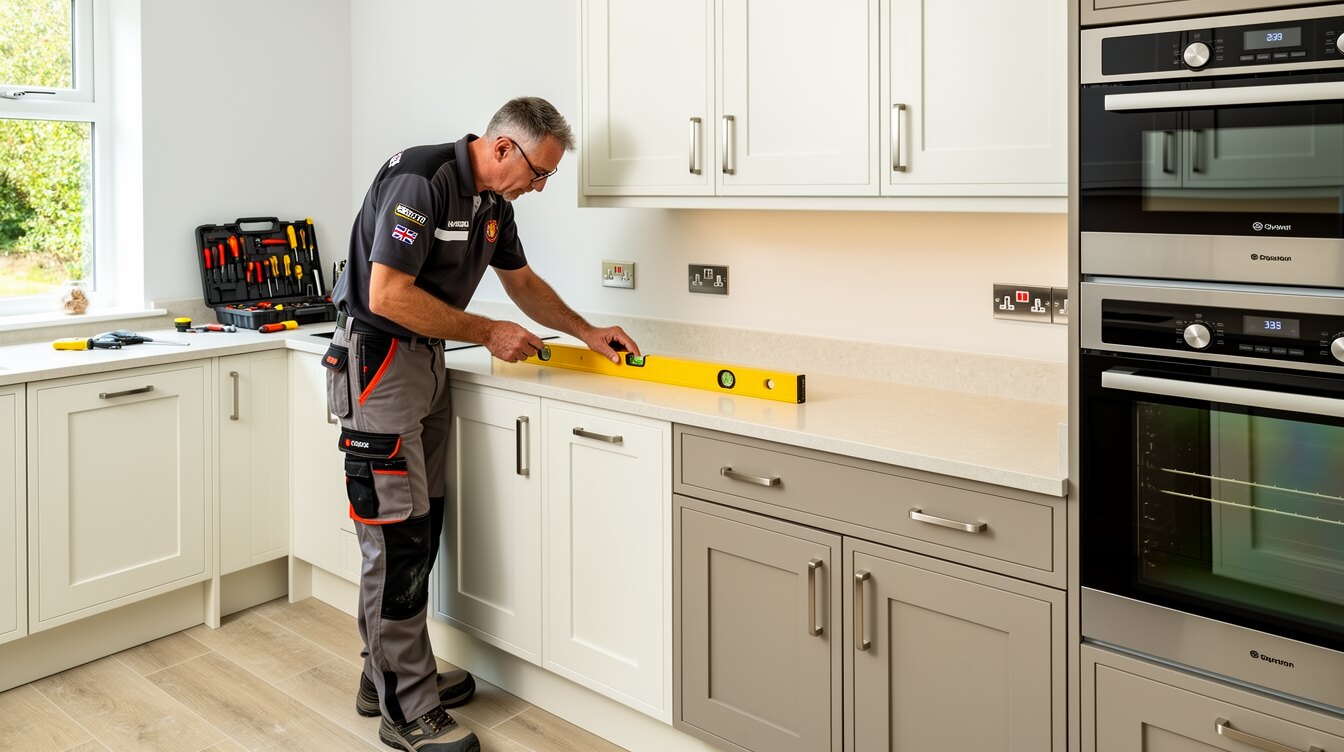
Fitting a kitchen is one of the biggest jobs a homeowner commissions, and they research it hard before choosing anyone. A kitchen fitter's website has to look as finished as the kitchens you build, prove the quality, and make booking a survey easy.
This guide covers what wins kitchen work online: a portfolio that looks premium, services named clearly, the trust signals that justify the spend, and the speed to keep a researcher reading.
A premium portfolio for a premium job
Kitchen buyers are spending serious money and they want to see proof you can deliver the look they are after. Big, well-lit photos of kitchens you have fitted, ideally across a few styles from modern handleless to classic shaker, are the heart of the site.
Presentation matters as much as the photos. A clean, spacious layout makes your work look like the high-end product it is, while a cluttered template undersells it. For a job this size, the website is the showroom, so it needs to feel like one.
Be clear about what you actually do
Kitchen fitting covers a spectrum, and customers want to know where you sit. Do you supply and fit, or fit customer-supplied units? Do you handle the full job including plastering, electrics, plumbing and tiling, or just the carpentry? Do you do the design too?
Spell this out plainly. A homeowner who knows exactly what they get from you is far more likely to book, and being clear up front saves you both wasted enquiries.
Trust signals justify the spend
On a job worth thousands, trust is everything. Real Google reviews on the page, photos of completed kitchens with a line about the brief, any trade memberships, and a clear note on guarantees and how long the work takes. These answer the questions every kitchen buyer has.
Reassurance about disruption matters too. A kitchen out of action is a big deal for a family, so a clear, honest line on timescales and how you keep things moving builds real confidence.
Make booking a survey the obvious next step
Kitchens are always quoted after a survey, so the website's goal is to book that visit. A tappable phone number, a quote or survey request form, and an invitation to send photos or rough measurements for an initial idea. Make the first step small and easy.
Position the survey as helpful and no-obligation, because the customer is comparing a few fitters and you want yours to be the easy one to start with.
Fast loading keeps the researcher engaged
Kitchen sites are photo-heavy, which makes them prone to being slow. A researcher browsing several fitters in an evening will not wait for a sluggish gallery. Properly sized and compressed images let your portfolio load fast while still looking sharp.
Speed keeps people on the page long enough to fall for your work. On a slow site, they never see it.
Want a website that sell your best work?
I build fast, premium-feeling websites for Hertfordshire kitchen fitters, using your real installs, your services and your reviews. From £750, and you own everything. Based in Watford, and I build the site myself.
The bottom line for kitchen fitters: make the site feel as premium as your kitchens, show a range of real installs, prove the quality, and book the survey in one tap. That is a website that wins the big jobs.