
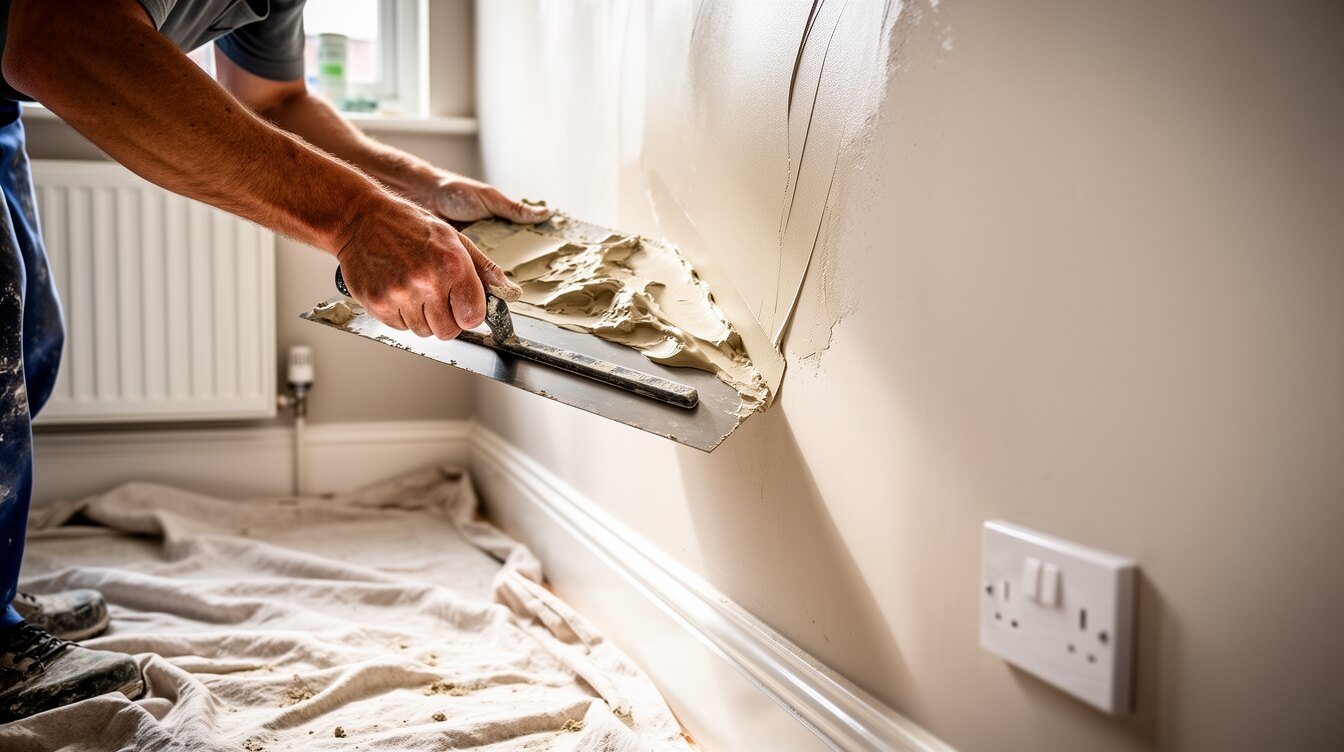
A plasterer lives and dies by the smoothness of the final coat, and a website can show that better than words ever will. Before-and-after photos, a clear list of the work you do, and an easy way to get in touch are what turn a browsing homeowner into a booked job.
Here is what a plasterer's website needs: photos that prove your finish, the specific jobs you take on, the trust signals that close the deal, and the speed to keep a phone visitor from leaving.
Before-and-after photos do the convincing
Nothing sells plastering like a before-and-after. A cracked, patchy old wall next to the same wall skimmed glass-smooth tells the whole story in one glance. It is the single most persuasive thing you can put on the page, and almost no plasterer's website bothers with it.
Photograph your jobs in decent light, show the messy starting point and the finished result side by side, and a homeowner instantly understands the transformation they are paying for. Proof beats promises, and a before-and-after is proof.
Name the jobs, not just "plastering"
People search for specific work: skimming over old walls, plasterboarding and dry lining, rendering exterior walls, Venetian or polished finishes, repairing ceilings, coving and cornice. A site that just says "plastering services" never appears for any of those searches.
Spell each one out as its own service. It tells Google exactly what you do and it reassures the homeowner that the particular job they need is one you handle every week.
Reassure them about the mess
The thing homeowners quietly dread about plastering is the mess and disruption. Address it head on. A line about how you protect floors and furniture, keep dust down, and clean up properly does more to win a nervous customer than any amount of trade jargon.
Pair that with real reviews from local customers and you remove the two biggest reasons someone hesitates: will it be messy, and can I trust them in my home.
Make getting a quote effortless
Plastering jobs are quoted, so your website's job is to start that conversation. Put a tappable phone number on every screen, offer a short quote form, and make clear which towns you cover. Many plasterers prefer a quick photo and measurements over the phone, so invite exactly that.
The easier you make the first step, the more quotes you give, and the more jobs you win.
A fast site keeps the visitor there
Plasterers' sites are often slow because they are built on heavy templates loaded with plugins. A homeowner comparing three local plasterers will not wait for a sluggish page, they will tap back and try the next one. A fast, hand-built site loads in under a second and keeps them reading.
Speed is invisible when it is right and fatal when it is wrong. It is the cheapest advantage you can have over the other plasterers in your area.
Want a website that win more work?
I build fast, photo-led websites for Hertfordshire plasterers, using your real jobs, your services and your voice. From £750, and you own everything. I'm based in Watford, and the person who answers the phone is the person who builds the site.
The bottom line for plasterers: prove your finish with before-and-after photos, name every service, calm the worry about mess, and load fast. That is a website that books skimming and rendering jobs while you are on the tools.