
Getting found and getting hired are two separate problems. Getting found is about search: ranking for what homeowners type. Getting hired is about trust and clarity: convincing the person who lands. A complete tradesman's website solves both.
Most trade websites are built as if only one of these matters. They look nice but rank for nothing, or they rank but give the visitor no reason to call. Here is how to do both.
Getting found starts with local search terms
Homeowners search for a trade and a place: "electrician in Watford", "roofer near St Albans", "emergency plumber Rickmansworth". Your website has to use those exact phrases to rank for them. That means naming your town, your neighbouring towns, and your postcodes explicitly on the page, and writing a service page for each job you do. Generic copy that never names a place ranks for nothing.
Your Google Business Profile feeds your website
A claimed, complete Google Business Profile is half of getting found, and it points straight at your website. Fill in every field, list your services, add real photos, and keep your name, address and phone number identical to what is on your site. The profile and the website reinforce each other; a mismatch between them weakens both.
Getting hired depends on trust signals
Once a homeowner lands, they decide in seconds whether to trust you. Three signals carry the weight: genuine Google reviews shown with names, named accreditations with registration numbers, and photos of your own completed jobs. Each one answers the question "is this a real, competent business" before the homeowner has to ask it.
Speed and mobile-first decide whether anyone stays
Most homeowners search on a phone, so your website has to be fast and mobile-first or it loses people before either job is done. A hand-coded HTML site loads in under a second; a bloated WordPress build takes four or five. Speed is also a Google ranking factor, so a slow site is worse at getting found and worse at getting hired at the same time.
Real photos beat stock images every time
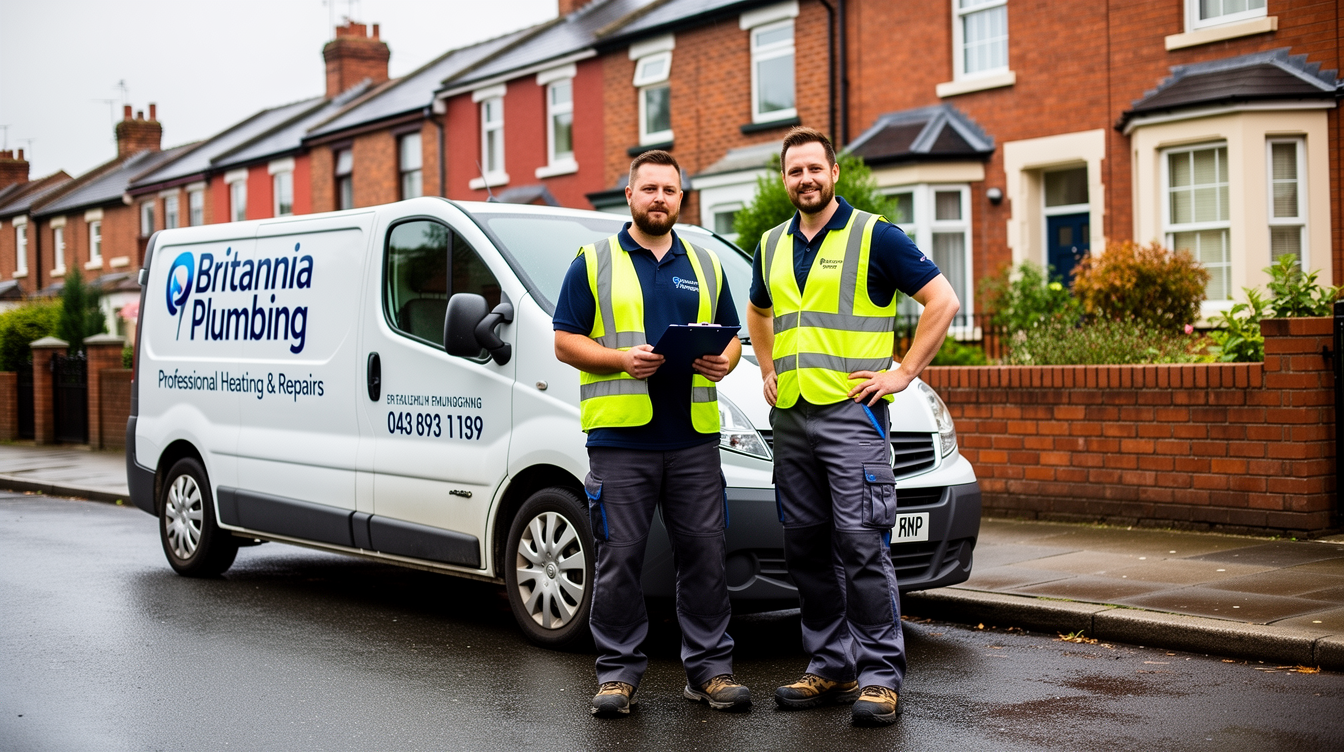
Photos of your actual work are the fastest trust signal there is. A homeowner can tell the difference between a stock photo and a job you really did in their area. Lead with genuine completed work and a photo of the owner. Stock images quietly signal that there may be nothing real behind the website.
One clear call to action on every page
Every page should make the next step obvious: call this number, or fill in this short form. A tappable phone number fixed to the screen handles urgent work; a three-field quote form handles planned work. A website that gets someone interested but then makes them hunt for how to contact you has failed at getting hired.
Own the website outright, or you do not really have one
A tradesman should own the website completely: the code, the photos, the copy, the domain. Many agencies build on platforms you only rent, with a monthly fee forever and no way to move. If you do not own it, every improvement you make to getting found and getting hired is improving someone else's asset.
Want a site that gets you found and hired?
I build fast, mobile-first websites for Hertfordshire tradesmen, built to rank for your towns and convert the visitors that ranking brings in. From £750, and you own everything. I'm based in Watford, and it's just me.
The bottom line for tradesmen: a complete website does two jobs. It gets found by targeting local search terms and a strong Google Business Profile, and it gets hired through trust signals, speed, real photos and one clear call to action. Solve only one and the website earns nothing. Solve both, on a site you own, and it becomes your most reliable source of work.